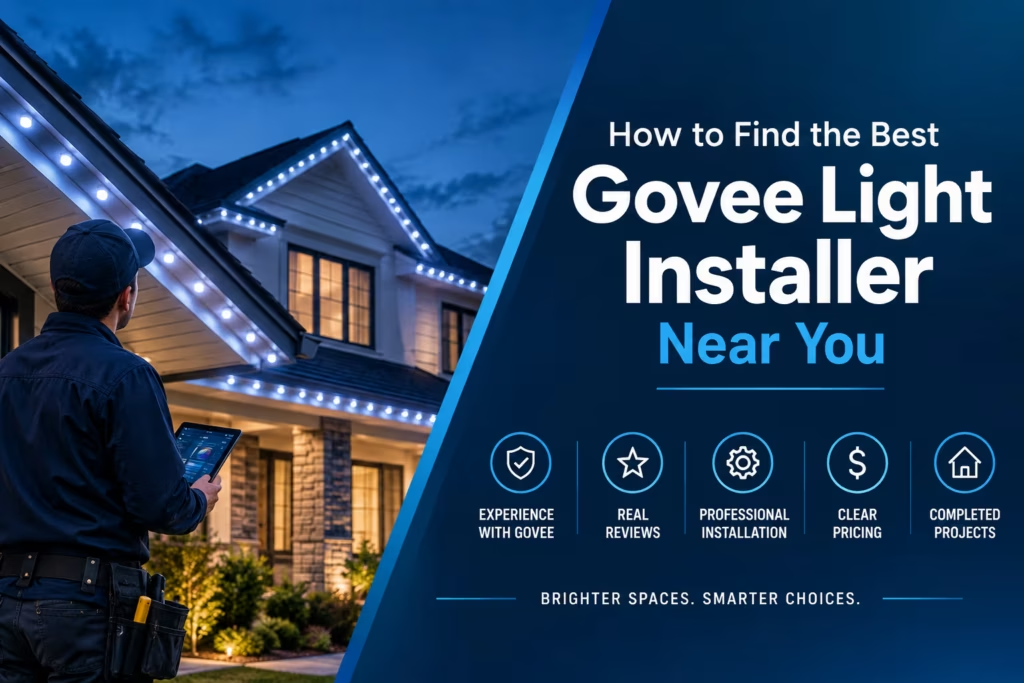
Look for an installer with experience with Govee lighting, positive customer reviews, professional installation methods, clear pricing, and examples of completed projects. For outdoor installations, also check that the installer understands roofline layouts, weather exposure, power connections, and smart-light setup.
Finding a Govee light installer is easy. Finding one who understands how to install the system cleanly, safely, and in a way that looks intentional is harder.
With permanent outdoor lighting, small installation decisions matter. Poor spacing, visible wiring, weak mounting points, or badly planned corners can affect the finished appearance long after the installation is complete.
Before we install anything, we look at the house as a complete roofline.
We consider the length of each section, corners, peaks, changes in roof elevation, mounting surfaces, power access, and how the lighting will transition from one section to another.
This planning step matters because a roofline that looks simple from the ground can become much more complicated once you start working around its individual sections.
A professional Govee light installer should be responsible for more than mounting the lights. The installation process can include:
We also pay attention to how the installation looks when the lights are turned off. Permanent lighting becomes part of the home’s exterior, so the daytime finish matters just as much as the nighttime effect.
The biggest advantage of professional installation is not simply speed. It is getting the details right the first time.
An experienced Govee light installer understands how permanent lighting should look when viewed from the street, not just from directly underneath the roof.
That distinction matters.
For example, lights installed with inconsistent spacing can create an uneven visual pattern. A cable routed around a corner without planning may also become noticeable during daylight.
Professional installation can help with:
For difficult rooflines, professional experience becomes even more valuable because the installer must work around architectural changes rather than treating the house as one straight line.
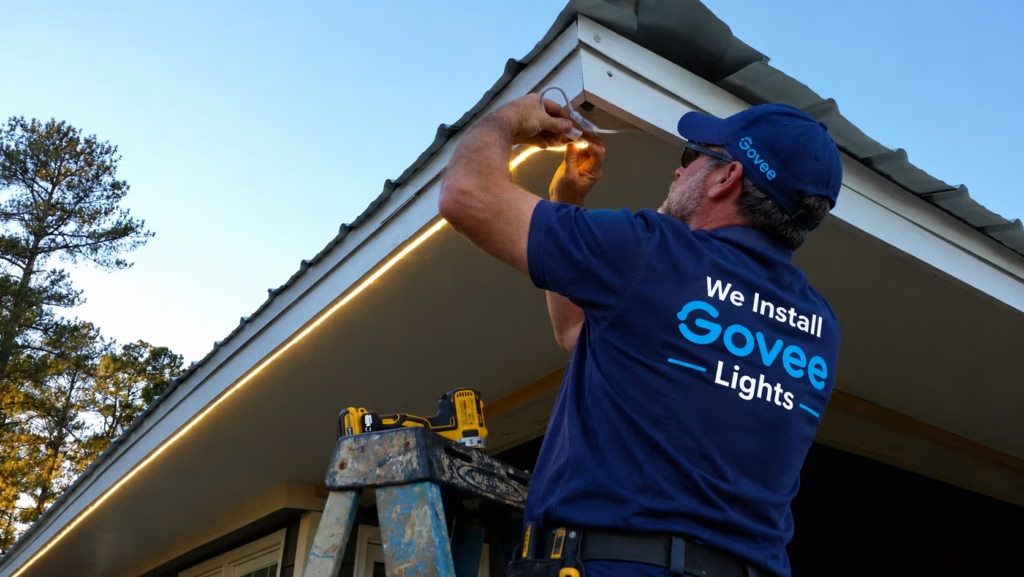
Do not choose an installer simply because they advertise Govee light installation.
Look for evidence that they understand the actual installation process.
What to Check | Why It Matters |
Previous Govee projects | Shows relevant installation experience |
Customer reviews | Helps verify reliability and communication |
Clear scope of work | Prevents misunderstandings |
Installation method | Shows whether mounting is planned properly |
Outdoor experience | Important for rooflines and weather exposure |
Smart setup | Confirms the system will be tested after installation |
Ask to see completed projects whenever possible.
Look closely at corners, roof peaks, cable transitions, and the areas where lights meet the power connection.
A Govee outdoor light installer should also be comfortable explaining how the installation will handle the property’s specific exterior surfaces.
A basic installer may focus on getting the lights up.
A skilled installer focuses on how the entire system will look and function afterward.
That includes daylight appearance, wire visibility, controller location, access to power, and future maintenance.
We encourage homeowners to ask detailed questions before approving an installation.
Start with:
Pay particular attention to the answers.
A knowledgeable installer should be able to explain the proposed approach for your home rather than giving a generic answer that could apply to every property.
The cost of Govee light installation depends on the light kit, roofline length, mounting surface, roof complexity, and labor.
Professional installation typically runs around $5-$10 per linear foot, while larger or more complicated homes may cost more due to difficult access, multiple roof sections, corners, and electrical work.
The lights themselves are usually the largest material expense for a DIY project.
If you already purchased the lights, professional installers may charge separately for mounting and setup.
Height, roof access, corners, peaks, and the condition of the mounting surface can all increase labor.
Some projects require work beyond simply attaching the lights.
Additional Cost | Typical Range |
Extra mounting hardware | $25–$150+ |
Electrical work | $150–$600+ |
Additional outlets | $200–$800+ |
Multiple Govee kits | $180–$400+ each |
Difficult roof access | $200–$1,000+ |
For a standard residential project, homeowners can generally expect about $500–$2,000+ for professional Govee light installation, depending on the system and property.
Large or complicated installations can reach $2,500–$4,000+ when extensive footage, electrical work, or difficult access is involved.
The most accurate estimate comes from measuring the actual roofline and identifying the installation requirements before purchasing the lights.
DIY can make sense when the project is small, accessible, and straightforward.
A homeowner with a simple roofline may be comfortable following the manufacturer’s instructions and handling basic mounting.
Professional Govee light installation becomes more attractive when the project involves:
There is also a visual consideration.
Permanent lighting stays on the house year-round. A few hours saved during installation may not be worth living with crooked sections or visible wiring for years.
If electrical work beyond the lighting manufacturer’s intended connections is required, use a properly qualified professional rather than improvising.
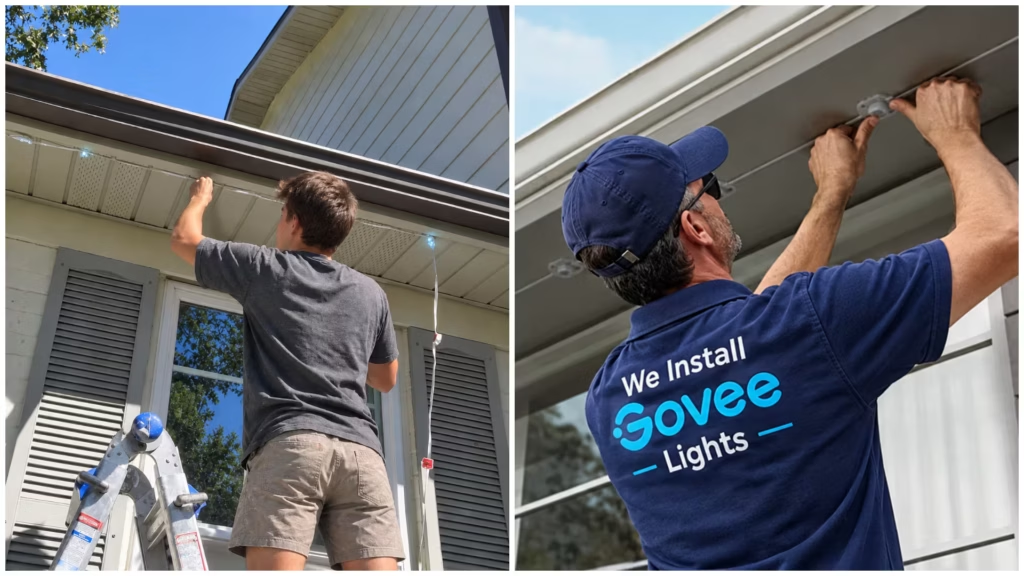
In our experience, careful preparation prevents many of the problems homeowners notice after an installation.
Consider a roofline with several corners.
If the light placement changes slightly from one section to another, the difference may not seem significant while installing the first few sections. Once the entire roof is illuminated, however, those inconsistencies can become obvious from the street.
The same applies to cable routing.
A connection point that seems convenient during installation may create unnecessary visible wiring later. Planning the route before mounting the lights allows those decisions to be made deliberately.
This is why we do not treat every home as if it has the same installation requirements.
The house determines the installation approach.
Before you approve the installation, make sure you can answer “yes” to most of these:
The right Govee installation service should make the project feel planned before the first light is mounted.
You are not simply paying for someone to put lights on a house. You are paying for the installation to look deliberate, remain functional, and fit the architecture.
For a simple project, that may mean a straightforward installation. For a complicated roofline, it can mean the difference between lights that look professionally integrated and lights that simply look attached.
Choose the installer based on demonstrated Govee experience, installation planning, workmanship, and a clearly defined scope: not just the lowest quote.
Share your thoughts below and let us know how we can help with your lighting project.
Get fast, reliable help for your lighting project with clean installation, secure setup, and expert support from start to finish.