
If you are planning to install Govee deck lights, there is a good chance you are not really asking only one question.
You are probably asking a bunch of questions at the same time.
You want to know how big the lights are.
You want to know how far apart they should go.
You want to know how much area one kit can cover.
You want to know whether you can extend them.
And most importantly, you want to know whether they will actually work on your deck without turning the whole job into a headache.
That is why people search for things like Govee deck lights dimensions, Govee deck lights max length and Govee deck lights extension installation.
They are not looking for a dry spec sheet. They are trying to avoid mistakes before buying or installing anything.
So let’s talk about this in a simple way.
What do Govee Deck Lights Dimensions actually mean?
When people search for Govee deck lights dimensions, they usually mean more than just the physical size of one light.
They are often asking about four things:
First the size of each light.
This Means the Diameter, width and depth of the light. This Matters Because you Need to Know whether the light will fit into your deck boards, steps, railing posts and edge trim.
Second, the spacing between the lights.
This Matters Because Spacing affects How your deck will look at night. Lights placed too close can look crowded. Lights placed too far apart can leave dark spots.
Third the total length of the lighting run.
This is The Overall cable length or system reach. It helps you figure out whether one kit is enough for your deck or whether you need more.
Fourth, the extension options.
This Matters if your Deck is larger, has stairs, wraps around corners and includes multiple sections.
So When someone asks about deck light dimensions, they are Really asking:
Will this system fit my space, cover my layout and install cleanly?
That is the real question.
Why dimensions matter before you buy
A lot of people get excited by the look of deck lights online and then realize later that planning matters more than they expected.
For example, imagine someone has a medium-size backyard deck with steps going down to a patio. They see Govee deck lights and love the clean look. They assume they can just order a kit, drill a few holes, and plug everything in.
Then problems start.
Maybe the lights are not the right size for the boards.
Maybe the spacing feels uneven.
Maybe the cable run does not reach the far side of the deck.
Maybe they need an extension cable but did not plan for it.
This is why dimensions are not just technical details. They help you avoid buying the wrong setup.
If you understand the size, spacing, max length, and extension options before installation, the whole project becomes easier.
The size of each Govee deck light
Let’s start with the most basic part.
The physical size of each light tells you how much space it needs and what kind of mounting is possible.
This includes:
the visible top size of the light
the hole size needed for installation
the depth behind the surface
the wire or connector space underneath
This matters a lot if you are installing lights in deck steps, narrow boards, railing posts, or trim pieces.
For example, if your step board is shallow or your railing cap is narrow, you do not want to guess. A light may look small in product photos, but real installation space can be tighter than expected.
That is why homeowners and contractors often check dimensions before anything else. They want to answer one simple question:
Will this actually fit where I want to put it?
If you are planning your layout, measure your boards and steps first. Then compare that space to the product measurements and installation requirements. That small step can save a lot of time later.

What spacing means and why it changes the whole look
Now let’s talk about spacing.
Spacing is one of the biggest reasons deck lighting looks either professional or awkward.
You can buy good lights, install them correctly, and still end up with a result that feels off if the spacing is wrong.
Good spacing depends on:
the size of the deck
whether lights are for safety, decoration & both
how bright the lights are
where people will actually walk or sit
For example, stair lights often need more practical spacing because they help with visibility and safety.
Accent lights on a deck edge or railing may be spaced differently because the goal is more about mood and appearance.
If lights are too close together, the deck can look overly busy.
If they are too far apart, the lighting can feel weak and uneven.
This is why people searching for Govee deck lights spacing are usually trying to avoid wasting time and money. They want the finished result to look balanced.
A smart approach is to think about the purpose of each section.
If you want a soft, modern glow around the perimeter, wider spacing may work.
If you want better visibility on steps, tighter spacing may make more sense.
In other words, spacing is not only about measurements. It is about how you want the deck to feel at night.
What Max Length really means
This is another part that confuses a lot of people.
When People search Govee Deck lights max length, they are usually Asking:
How Much Deck can one system cover before I run into Problems?
That is a very Practical Question.
Max Length can mean:
the total reach of the light run
How far the system can go from start to finish
How much can be added with extensions
Whether performance changes when you go longer
This Matters Because Many Decks are not just one simple straight line.
Some decks have stairs.
Some wrap around corners.
Some have different levels.
Some connect to patios, pools, or outdoor kitchens.
So the real issue is not only length. It is layout.
A kit might sound long enough on paper, but once you account for corners, direction changes, stairs and cable routing, you may realize the usable coverage is less than expected.
That is why planning the path matters just as much as checking the total max length.
Before buying, sketch your deck layout. Mark where you want lights and where the power source will be. Once you see the full route, you get a much better idea of whether the standard setup is enough or whether you need extensions.
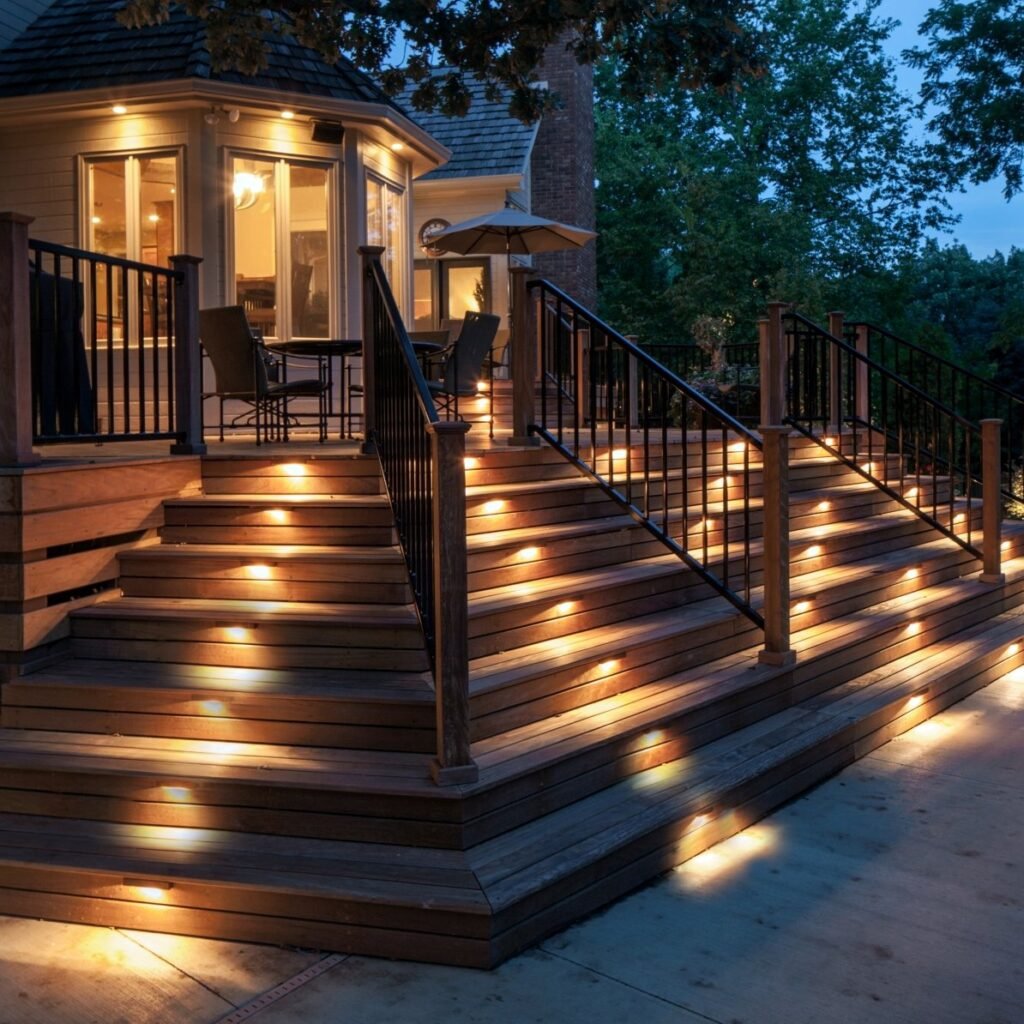
Do you need a Govee deck lights extension?
Not every deck needs extensions, but many people end up needing them because real-world layouts are rarely simple.
An extension becomes useful when:
your deck is longer than the base setup
you have stairs away from the main deck
you need cleaner wire routing
you want lights in more than one section
the controller or power source is not close to the install area
This is where buyers start searching for things like:
Govee deck lights extension
Govee deck lights extension replacement
Govee deck lights extension installation instructions
Govee deck lights extension replacement parts
These are not random searches. They happen because people are trying to solve real install problems.
Maybe they bought the main kit and now realize it does not reach.
Maybe they are Replacing a Damaged extension Cable.
Maybe they Want to Install Everything neatly instead of Forcing Wires to Stretch
Extensions Can Make a Setup Cleaner and More Flexible but they Only Help When Planned Properly. You Still need to Make sure Everything Works with your Layout and Installation Method
Real situations where people get stuck
Let’s make this more practical.
Scenario 1: The deck is larger than expected
A homeowner measures the front edge of the deck and thinks one kit is enough. But They Forget about side Sections and Stairs. Now the Lights do not reach the Full Layout.
Scenario 2: The Boards are Narrower than the Lights
The Lights looked small online but Once installation starts, the Spacing and Hole Placement become Tricky. Suddenly the Design Feels Forced.
Scenario 3: The spacing looked good in theory, but not in person
Even If the Math works some Layouts do not Feel right Visually. That is Why Many Installers Test the Layout Before Drilling.
Scenario 4: The power source is in the wrong place
The deck lights may fit perfectly, but the cable path from the controller or outlet may require extra length or a better routing plan.
These are the reasons people should think about dimensions, spacing, max length, and extensions together, not separately.
Should you install Govee deck lights yourself?
That depends on your comfort level.
If you are comfortable measuring, drilling, routing wires, and following installation instructions carefully, a DIY install may work fine for a simple deck layout.
But if your deck has multiple levels, long runs, tight corners, tricky board sizes, or custom spacing needs, the project can get complicated fast.
DIY is usually best for:
simple layouts
small decks
straightforward power access
people comfortable with detail work
Professional installation may be better for:
larger decks
complex layouts
cleaner hidden-wire finishes
extension-heavy setups
homeowners who want a polished look without trial and error
There is nothing wrong with doing it yourself. But there is also nothing wrong with deciding that neat spacing, clean drilling, and proper extension planning are worth professional help.
How to plan your deck lights the smart way
Before ordering anything, do this:
Measure the width and depth of the places where lights will go.
Measure the full route of the layout, not just one side.
Think about whether the lighting is mainly for safety, design, or both.
Decide where the power source and controller will sit.
Mark possible spacing with tape or chalk before installation.
Check whether a standard kit covers the full route or whether an extension is needed.
This one planning step can save you from bad spacing, short runs, or unnecessary replacement parts later.

What buyers should compare before choosing a setup
If you are still deciding, focus on these practical questions:
Will the lights physically fit your boards or steps?
Will the spacing create the look you want?
Will the total length cover the deck layout you actually have?
Will you need an extension for stairs, corners, or separate sections?
Do you want a DIY project, or do you want a cleaner professional install?
Those five questions matter more than hype.
Final thoughts
The phrase Govee deck lights dimensions sounds simple, but it really opens the door to the whole installation plan.
It is not just about how big one light is.
It is about whether the lights fit your deck, whether the spacing looks right, whether the system reaches far enough, and whether extensions are needed to finish the job properly.
That is why this topic matters so much for buyers and homeowners.
When you understand dimensions, spacing, and max length together, you stop guessing. You start planning.
And that is what leads to a deck lighting setup that actually looks clean, works well, and feels worth the money.
If you are planning a Govee deck light setup and want it to look neat, balanced, and professionally laid out, getting help with layout planning, extension setup, and final installation can save a lot of frustration. A good setup should not just light the deck. It should fit the space like it was meant to be there.
FAQs
What Does Govee deck lights Dimensions mean?
It Usually means the Size of each light, the spacing Between lights, the total run length, and How extensions affect the Full Setup
Why does spacing matter for deck lights?
Spacing affects both appearance and function. Good spacing helps the deck look balanced and also improves visibility on steps and walkways.
What is the max length of Govee deck lights?
Max length usually refers to how much area one lighting system can cover from start to finish, including any compatible extensions. The usable length depends on the layout, not just the number on the box.
Do I need an extension for Govee deck lights?
You may need one if your deck is large, has stairs, wraps around corners, or if the power source is farther away than expected.
Can I install Govee deck lights myself?
Yes, for simple layouts many people can handle it themselves. But larger or more detailed projects may be easier and cleaner with professional installation.
What should I measure before buying deck lights?
Measure board width, installation depth, total route length, stair sections, corner turns, and the distance from the power source to the first light.